Last Updated on May 27, 2026 by David
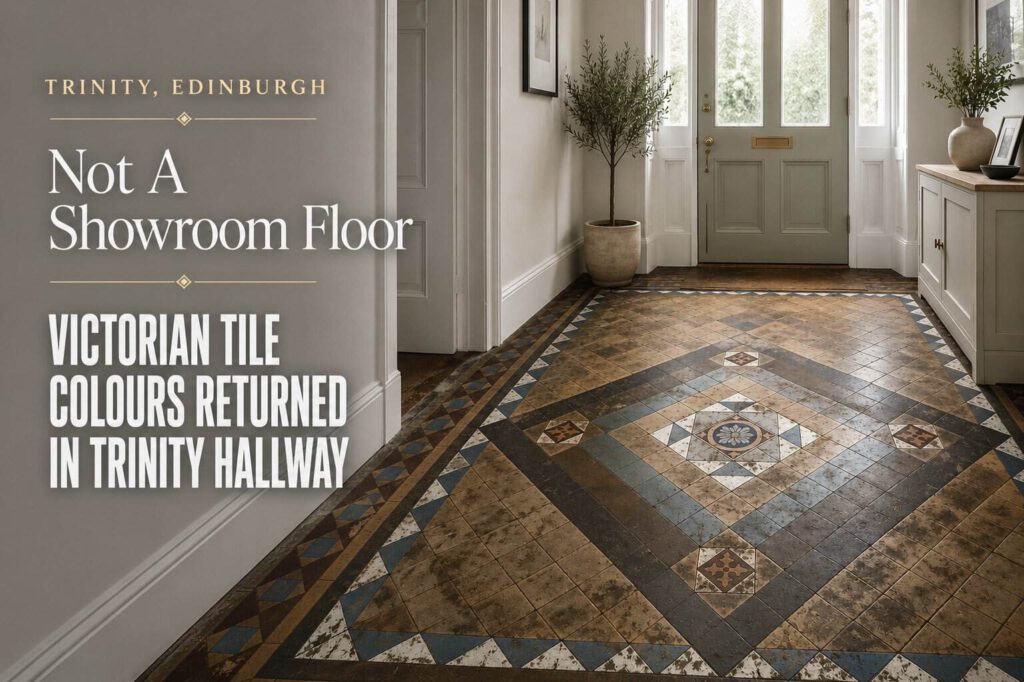
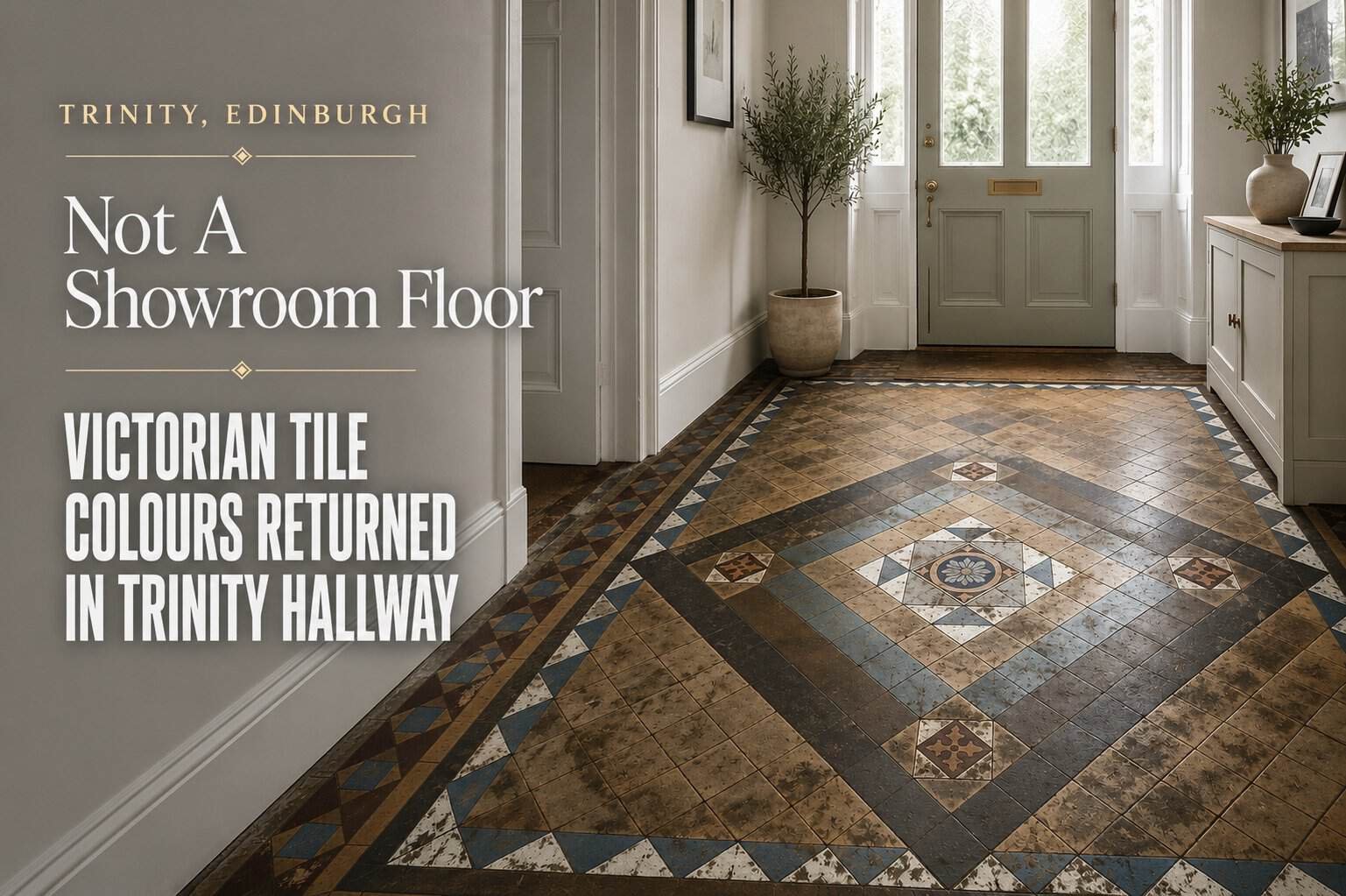
The stunning original Victorian geometric design was hidden under layers of dirt, leading to a Trinity hallway that appeared increasingly dull despite ongoing cleaning efforts. Accumulated coatings, stubborn dirt, moisture stains, and years of residue had diminished the encaustic pattern, preventing the entrance from showcasing the historic charm expected in one of Edinburgh’s premier conservation areas.
Watch this informative video for a concise overview of the Trinity Victorian Tile restoration project, and delve into the detailed article below to gain comprehensive insights into the restoration process.
What Factors Led to the Decline of the Original Victorian Tile Design?
Identifying Significant Surface Residue in the Entrance Hallway
If your Victorian tile floor seems flat and uneven despite extensive cleaning, outdated and failing coatings, combined with deeply embedded dirt, are likely obscuring the original design. In this Trinity property, the heavily soiled hallway was hidden beneath layers of old waxes, acrylic sealers, and decades of ingrained grime, resulting in a dark surface that concealed the original geometric pattern.
Trinity, situated in the EH5 postcode district of northern Edinburgh, is known for its rich conservation character and a high concentration of period homes. The area boasts a variety of Victorian and Edwardian villas, sandstone terraces, traditional tenements, and former mansion houses, many of which date from the mid-19th to early 20th centuries, with numerous properties still featuring their original entrance halls and vestibules. Typically, Victorian tile floors are found in hallways, porches, vestibules, and entrance corridors, where intricate geometric and encaustic designs were deliberately crafted to create a memorable first impression. The original decorative elements, including cornicing, tiled thresholds, and wooden staircases, are prevalent throughout the area, reflecting Trinity’s long-standing association with affluent period housing.
The rapid expansion of Trinity throughout the 19th century, as Edinburgh extended northwards, transformed it into a sought-after residential area for affluent families seeking a quieter lifestyle away from the bustling city centre. This era of villa, terrace, and tenement development accounts for the retention of many original Victorian geometric and encaustic tiled entrance floors in Trinity properties today.
Years of foot traffic had forced grime and cleaning residues deep into the porous clay surface, particularly around the doorway and throughout the central hallway where daily wear was most apparent. The original fired matte finish had become visually flat beneath layers of darkened coatings, and repeated mopping left streaks and uneven patches, giving the floor a perpetually unclean look.
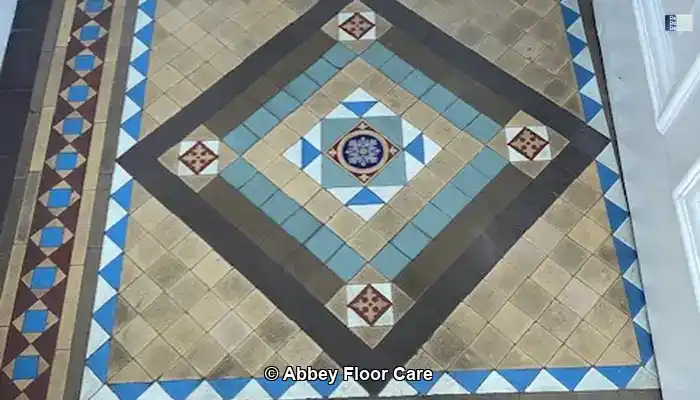
The porosity of the tiles was particularly evident around the outer edges of the vestibule, where moisture and dirt had compromised the clay body beneath ineffective surface treatments. The floor displayed clear signs of old wax accumulation, degraded coatings, and dark stains from previous maintenance products that had gradually soaked into the unglazed surface instead of forming protective barriers.
Victorian encaustic and geometric tiles are fired at high temperatures, resulting in a chemically stable yet physically vulnerable surface that is prone to abrasion and not compatible with acidic cleaning agents. Previous attempts to enhance the hallway’s appearance likely involved harsher household cleaners and abrasive pads, which dulled the historic tile face and intensified visible wear on the softer buff sections of the pattern.
How Have Inconsistent Repairs and Historical Modifications Compromised Aesthetic Integrity?
Patch repairs around the threshold and doorway disrupted the original geometric arrangement, diverting attention from the remaining design. Several sections appeared to have been removed during earlier carpet installations or electrical work, then inadequately filled with cement screed and replacement pieces that failed to match the surrounding Victorian originals appropriately.
Carpet gripper nails had damaged several edge tiles near the skirting boards, while hardened glue and lino adhesive were evident around the entrance where older coverings had been removed. The floor also showed signs of cement residue and grout smears left from earlier repair attempts, resulting in pale patches that contrasted sharply with the darker areas of the hallway.
Reclaimed Victorian tiles had been introduced into a small repair area near the doorway, but their colour depth and thickness did not correspond with the original layout. These replacements disrupted the repeating border pattern, making the surrounding wear more noticeable, as the newer sections appeared visually cleaner than the older clay-based tiles nearby.
Historic tile layouts often highlight how earlier repairs have altered the corridor’s appearance long before professional restoration occurs. Similar instances of faded geometric patterns and worn clay hues can be observed in this article about restoring colour and pigment to faded Victorian mosaic tiles, where deep contamination also obscured the original design.
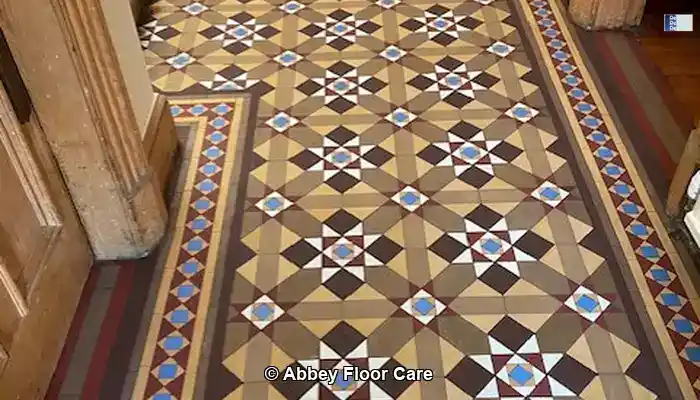
Heavy foot traffic had particularly affected the softer buff and red sections compared to the darker geometric pieces, which is typical with aged encaustic dust-pressed tiles. The original clay slip pattern remained visible across most areas, although decades of abrasion had softened some of the sharper details near the centre of the hallway, where the surface had absorbed dirt more aggressively.
What Role Do Coatings and Moisture Stains Play in Causing Discolouration?
Dull blackened patches throughout the vestibule indicated that old linseed oil and wax coatings had gradually deteriorated within the clay structure rather than remaining on the surface. Such coatings frequently darken over time, especially where moisture becomes trapped beneath impermeable floor coverings or failing sealers.
Several areas near the doorway also displayed white deposits and surface residues linked to moisture movement beneath the floor. These marks were evident around joints and edges where dampness had pushed salts upwards through the porous tile body, leaving a pale bloom against the darker sections of the pattern after evaporation occurred.
Efflorescence was visible in isolated patches close to the entrance, where surface coatings had begun peeling and lifting from the tiles. The white powder and persistent deposits were relatively minor at this stage, but the staining pattern clearly indicated long-term moisture movement beneath the hallway rather than a temporary spill or cleaning issue.
Shadow marks from rubber underlay remained visible beneath sections of the vestibule where carpet coverings had been in place for many years. The deterioration of the old underlay had left uneven staining and darker undulations across the tile surface, particularly in areas where moisture and dirt had become trapped beneath the impervious coverings.
Condition assessment during the initial survey confirmed that most of the original material remained structurally sound despite its poor appearance. The hallway retained its historic layout, the majority of the geometric border remained intact, and the encaustic pattern still possessed sufficient colour depth to warrant full restoration instead of partial replacement.
A properly restored Victorian tile floor should showcase the original fired matte surface with consistent colour and pattern definition, while a suitably sealed surface—where applicable—adds only a subtle protective sheen without compromising the period character. The aim throughout this Trinity restoration was not to modernise the hallway but to reveal the original appearance obscured by years of inadequate maintenance and surface contamination.
How Does Moisture Movement Beneath the Hallway Floor Influence Restoration Techniques?
Dull white deposits on old hallway floors often signify moisture rising through the substrate long before serious structural issues become apparent. This Trinity property lacked an original damp proof membrane beneath the tiled entrance, allowing dampness and salts from the soil below to migrate upwards through the screed and clay body during heavy rainfall and colder periods.
Moisture trapped beneath old tiles necessitates a tailored approach to restoration.
Elevated water table conditions across older Edinburgh properties can intensify the amount of moisture travelling beneath entrance halls and vestibules, especially where impermeable coverings previously hindered evaporation. The visible white powder in certain areas of the floor was linked to nitrate salts and mineral deposits rising to the surface as moisture evaporated through the porous structure.
Efflorescence became more apparent once the deteriorating coatings began to break down, as the trapped dampness could no longer remain concealed beneath the surface film. Moisture-active subfloors like this require breathable treatment options and controlled drying, as excessive water application can provoke additional salt activity and cloudy surface staining.
Which Key Testing Procedures Were Critical During the Victorian Tile Restoration Process?
Repeatedly soaking a Victorian tile floor without understanding its moisture behaviour can lead to deeper contamination and increased salt movement. The initial condition assessment concentrated on moisture readings, surface stability, and determining how much of the old sealer and residue could be safely removed without over-wetting the hallway.
Controlled extraction relied on low-moisture cleaning techniques, alkaline coatings remover treatments, and wet vacuum extraction to lift softened grime and slurry from the tile pores before residues could settle back into the surface. Throughout this process, damp meter readings were recorded as the floor required multiple drying stages before any sealing decisions could be made safely.
Over-wetting risks were deliberately avoided, as old permeable subfloors and loose historic bedding layers can react negatively to excessive water. Moisture movement beneath reclaimed Victorian tiles and older encaustic sections was closely monitored to prevent further white deposits, salt activation, or lifting around vulnerable edges during restoration.
The cleaning sequence also included guidance on future maintenance, as proper aftercare is the most critical factor in prolonging the floor’s lifespan. A professionally restored and adequately sealed floor is much easier to maintain than one that is worn or improperly treated, especially when using neutral pH cleaners and avoiding abrasive pads, bleach, and steam cleaners.
What Impressive Transformations Were Noted in the Hallway Tiles of Trinity After Restoration?
If your floor shows dark patches and faded geometric borders, deep-seated contamination typically obscures the original colour rather than permanently damaging it. After the removal of old coatings, trapped residues, and surface stains from this Trinity hallway, the encaustic layout regained its clarity, and the repeating border design became visible once more throughout the vestibule and entrance corridor.
The porosity of the tiles had previously allowed dirt and moisture to penetrate the clay surface, resulting in a visually dull hallway even after extensive cleaning. Controlled restoration and breathable sealing restored a more balanced appearance to the floor while maintaining the original fired matte character instead of creating an artificial glossy finish.
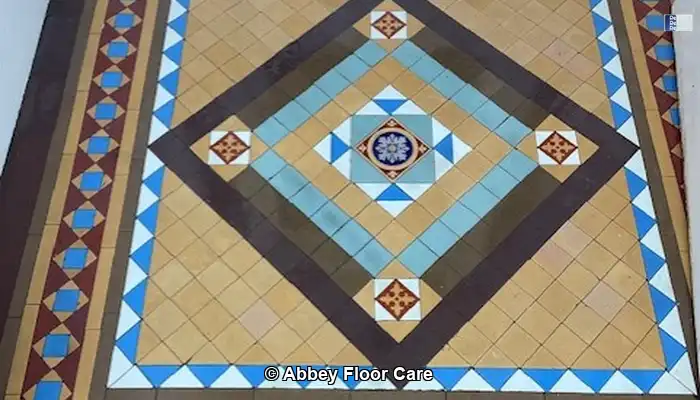
The restored vestibule now functions as an authentic period entrance rather than a dim transitional space obscured by outdated surface treatments. The floor not only looks significantly improved following the intervention but also remains easier to maintain and retains the architectural character expected in a Trinity period property.
Where Can You Discover More About Victorian Tile Restoration Projects Facing Similar Challenges?
Professional Victorian tile restoration projects frequently reveal similar moisture and residue issues across various period homes. Comparable instances of darkened coatings, faded geometric patterns, and trapped contamination can be found in projects such as Victorian tile restoration saved this floor and Victorian tile floors that remain dirty after cleaning, where previous surface films had concealed the original character of the hallway.
Moisture-aware restoration principles are evident in projects like Victorian clay tiles in Windsor held residue and Victorian tiles cleaning revealed this Blyth hall, where breathable sealing and meticulous extraction were crucial due to dampness and salts affecting the underlying structure.
Proper ongoing maintenance is essential following restoration. Removing grit before wet mopping, using pH-neutral cleaning solutions, and resealing at appropriate intervals help preserve the original surface and minimise future staining. More detailed maintenance guidance for period hallway floors can be found in the Victorian and Minton tile cleaning hub, which also explains how breathable protective finishes help aged floors stay cleaner for longer.

David Allen — Abbey Floor Care
David Allen of Abbey Floor Care has dedicated over 30 years to the restoration of Victorian and encaustic tiled floors throughout the UK, including this Trinity hallway, where failed coatings, moisture staining, and deep residue had nearly obscured the original geometric design. His restoration approach emphasises thorough condition assessments, moisture-aware cleaning techniques, and the preservation of the authentic character of historic tiled entrances.
The Article Victorian Tile Colours Returned In Trinity Hallway first appeared on https://www.abbeyfloorcare.co.uk
The Article Victorian Tile Colours Featured in the Trinity Hallway appeared first on https://fabritec.org
The Article Victorian Tile Colours Showcased in the Trinity Hallway Was Found On https://limitsofstrategy.com
The Article Victorian Tile Colours Featured in the Trinity Hallway found first on https://electroquench.com